There are few emotional pains more devastating than being falsely accused of betrayal by the person you love.
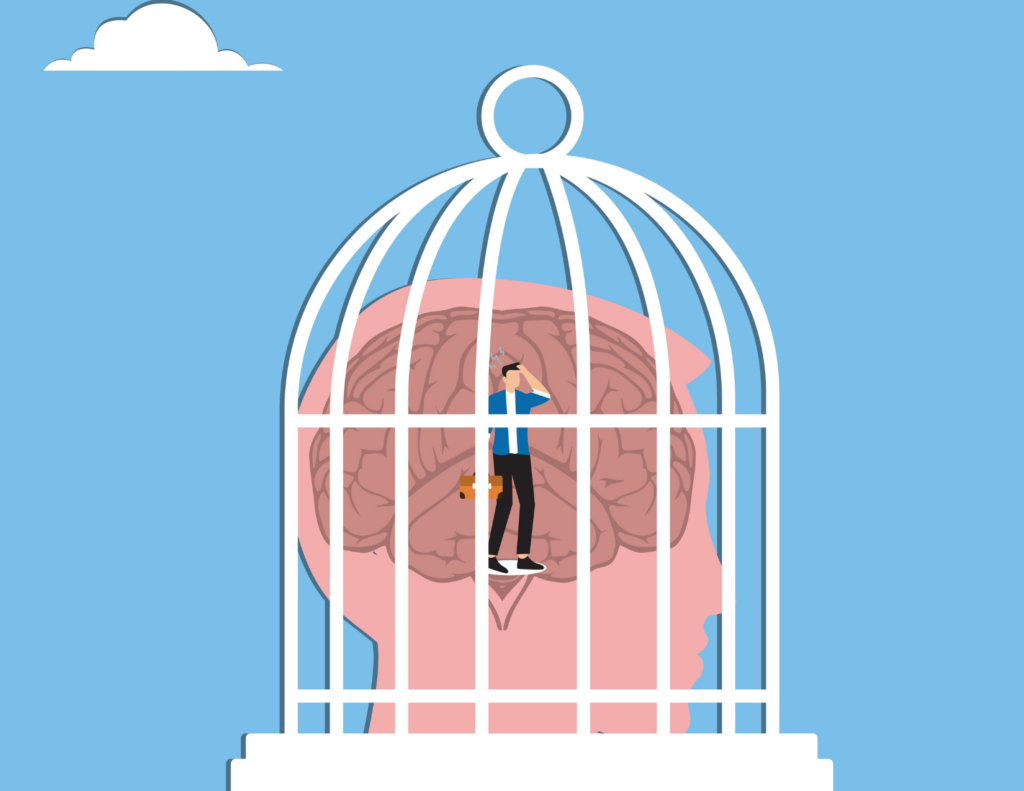
Many couples face this, not because of infidelity, but because of a psychiatric condition known as Othello syndrome — a form of delusional jealousy in which one partner becomes absolutely convinced, without real evidence, that the other is cheating.
When this condition is not recognized by the person’s psychiatrist, therapist, or family, the consequences can be emotionally catastrophic. It can turn a loving relationship into an exhausting cycle of suspicion, accusations, and emotional collapse.
This post explores how Othello syndrome delusional jealousy develops in the mind, how it impacts a relationship, and why early recognition is essential for both partners’ well-being.
✦ ✦ ✦
🎭 What Is Othello Syndrome?
Othello syndrome is a psychiatric condition in which a person holds a fixed, false belief that their partner is unfaithful.
This belief feels absolutely real to the individual, even when:
✓ No evidence exists
✓ Their partner has always been loyal
✓ Every “proof” can be disproven logically
✓ The accusation contradicts the partner’s character and values
It is not a personality flaw or simple insecurity — it is a distortion of perception driven by a mental health disorder. When untreated or denied, it becomes emotionally destructive.
✦ ✦ ✦
🧠 How Othello Syndrome Progresses in the Mind
The person affected becomes trapped in a mental loop:
1. They begin to interpret everyday events as “evidence.”
A random social media profile, a contact name, a browser suggestion, an unrelated photo — all become “proof” of betrayal.
2. They search relentlessly for confirmation.
This may include checking the partner’s phone, digging through old messages, inspecting call logs, analyzing Google Maps history, interpreting algorithmic suggestions as secret relationships, and believing there are second phones, hidden apps, or private emails. The mind becomes a detective — but a detective working from a story that is already decided.
3. Every denial by the partner increases the suspicion.
Because the belief is delusional in nature, logical explanation does not calm the fear — it feeds it.
4. The partner becomes the “enemy.”
Over time, the affected person sees the partner not as a lover, but as a liar, a manipulator, someone who is “hiding something,” someone with a secret life. The more faithful the partner is, the more painful the false accusation becomes — yet the syndrome makes the person unable to see reality.
5. The mind constructs a parallel story.
This can include imaginary affairs, imaginary digital interactions, imagined secret communications, and connections that never existed. The partner becomes trapped inside a narrative they never created and cannot escape.
✦ ✦ ✦
💔 The Emotional Cost for the Accused Partner
When the partner is truly loyal, Othello syndrome becomes emotionally devastating. They often experience:
😩 Exhaustion
Constantly defending against accusations of actions they would never commit.
😤 Disrespect
Their integrity, fidelity, and moral character are dismissed as lies.
💧 Emotional erosion
Daily suspicion slowly destroys closeness, trust, desire, and safety.
🤷 Helplessness
No explanation is enough, no evidence clears their name, no reassurance satisfies.
😢 Deep sadness
They watch the person they love disappear into fear-driven delusions.
💔 Moral injury
Being accused of violating their own core principles — loyalty, honesty, monogamy — creates deep emotional wounds.
Over time, even the strongest and most devoted partner reaches a point of emotional burnout.
Understanding what truly drives relationships helps us see how devastating this dynamic becomes.
✦ ✦ ✦
🩺 The Role of Therapists, Psychiatrists, and Family
Othello syndrome is often misinterpreted as:
→ Marital conflict
→ Insecurity
→ Trauma response
→ Personality issues
→ Attachment wounds
When this happens, the partner becomes the scapegoat, and the condition worsens.
If professionals unintentionally validate the delusion by assuming the jealousy is grounded in truth, the affected person becomes even more convinced that:
“Everyone sees it but him.”
“My therapist agrees he’s lying.”
“My family also thinks he’s cheating.”
This creates an emotional echo chamber that reinforces the belief and obstructs treatment.
Without proper recognition:
❌ The condition worsens
❌ The relationship suffers
❌ The partner is emotionally crushed
❌ The person with the syndrome receives no real help
✦ ✦ ✦
💥 When the Syndrome Is Denied, Relationships Collapse
If the family or therapist denies the existence of Othello syndrome, the partner becomes the villain, the accused, the emotional punching bag.
The relationship slowly shifts from love to survival.
Ultimately, many relationships end not because of betrayal — but because of the unbearable weight of false accusation.
“A faithful partner can forgive mistakes.
A faithful partner can withstand stress.
But no partner can survive a reality that never existed.”
This is why emotional self-reliance in relationships matters so much — for both partners.
✦ ✦ ✦
⏰ Why Recognizing Othello Syndrome Early Matters
When properly identified and treated, Othello syndrome can improve significantly, and relationships can recover.
But when ignored or misdiagnosed, it becomes:
→ Emotionally abusive
→ Psychologically destructive
→ Relationship-ending
Early recognition allows:
✓ Accurate psychiatric intervention
✓ Targeted therapy
✓ Stabilization of mood disorders
✓ Rebuilding of trust
✓ Protection of both partners
The first step is acknowledging what is truly happening.
✦ ✦ ✦
🌟 Conclusion: False Accusations Can Destroy Love — But Awareness Can Save It
Othello syndrome does not make someone a bad person. It makes them a person experiencing a painful mental distortion that feels overwhelmingly real.
But love cannot survive in a world where one partner is endlessly accused of actions that never happened.
Recognition is the key.
Compassion is essential.
Proper treatment can change everything.
When the condition is understood and addressed, healing becomes possible — for both partners.
For more guidance on building healthy partnerships, explore tips for creating strong, conscious relationships.
✦ ✦ ✦
Take the Next Step
Need Help Navigating Relationship Challenges?
Whether you’re experiencing emotional instability or supporting a partner through it, professional guidance can make all the difference.
✦ ✦ ✦
📚 Continue Your Journey
→ What Drives Relationships? — Understanding relationship dynamics
→ Tips for Him, for Her, and for Both — Creating conscious partnerships
→ Emotional Self-Reliance in Relationships — Building inner stability
🔗 Helpful Resources
🧠 Adult Emotional Dependency (AED)
💪 Emotional Self-Reliance
⚡ Brainpower & Mental Performance
😰 The Nature of Anxiety
🩹 Trauma & PTSD
🧘 Guided Meditations
🎯 Captain You® 50-Day Program
👤 Working With Luca
With compassion for all who struggle,
Luca Bosurgi
DHyp, MBSCH · Mind Fitness & CognitiveOS Hypnosis®
Could Adult Emotional Dependency Be Affecting You?
If this article resonated with you, take this 5-minute clinical assessment to understand whether Adult Emotional Dependency is at the root of what you are experiencing.
31 Clinical Indicators
Comprehensive assessment
Instant Results
Know immediately
100% Confidential
Your privacy protected
Based on 30+ years of clinical research • No signup required